
Body Architecture
Jitti merges his artistic approach to movement design with traditional knowledge to create from the concept of “Body Architecture.” Khon expert, Dr. Surat Jongda, has revealed a significant correlation between conventional Thai architecture and the arrangement of form in Khon dance. The traditional choreography positions the Khon mask, costume, and body postures to complement one another in ideal shapes and proportions. The illustrated outer space of the body often depicts shapes similar to the “chom hae” shape in traditional Thai architecture. Jitti takes this approach to view the outlines of the body and its anatomical structure.
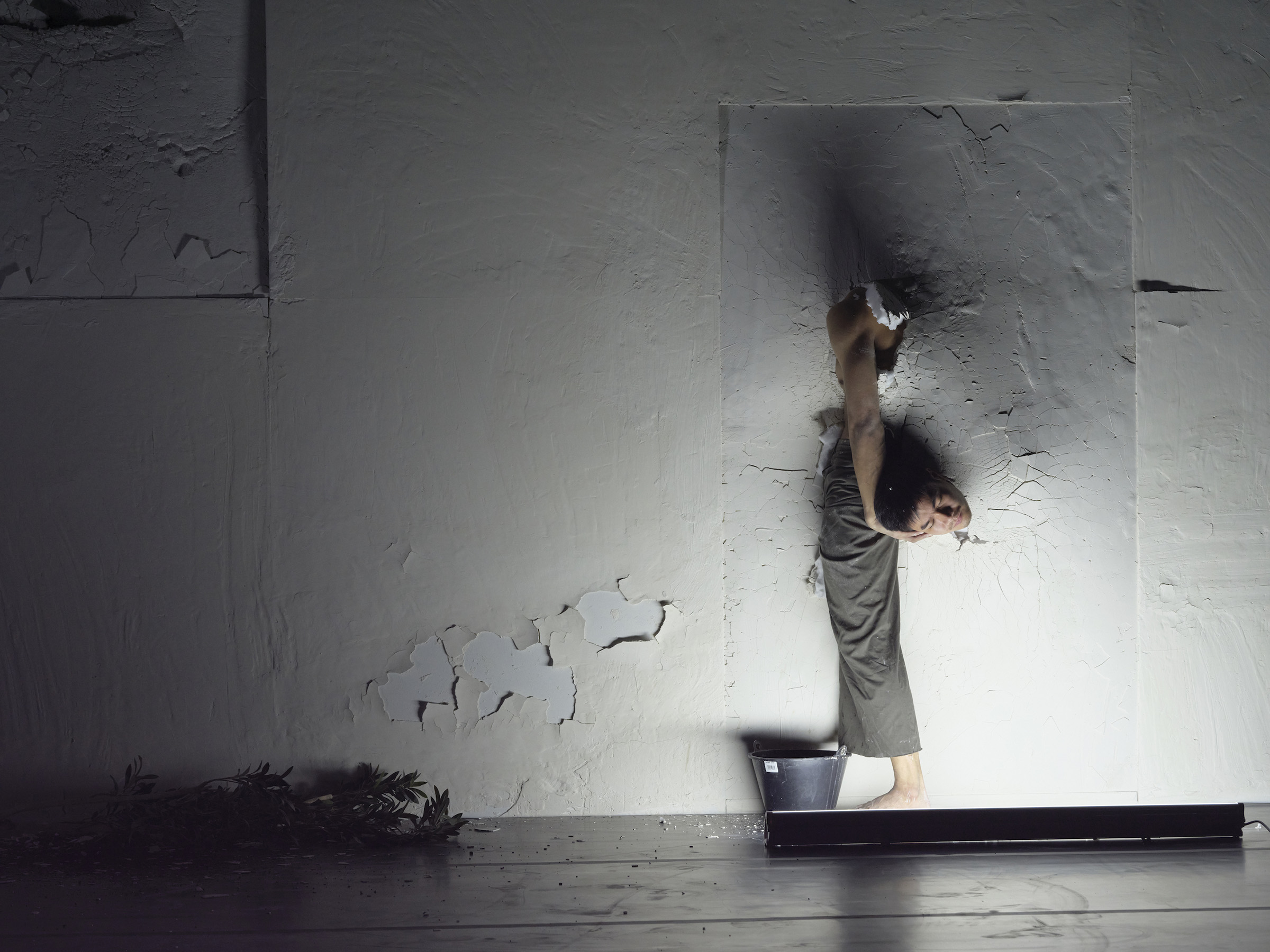
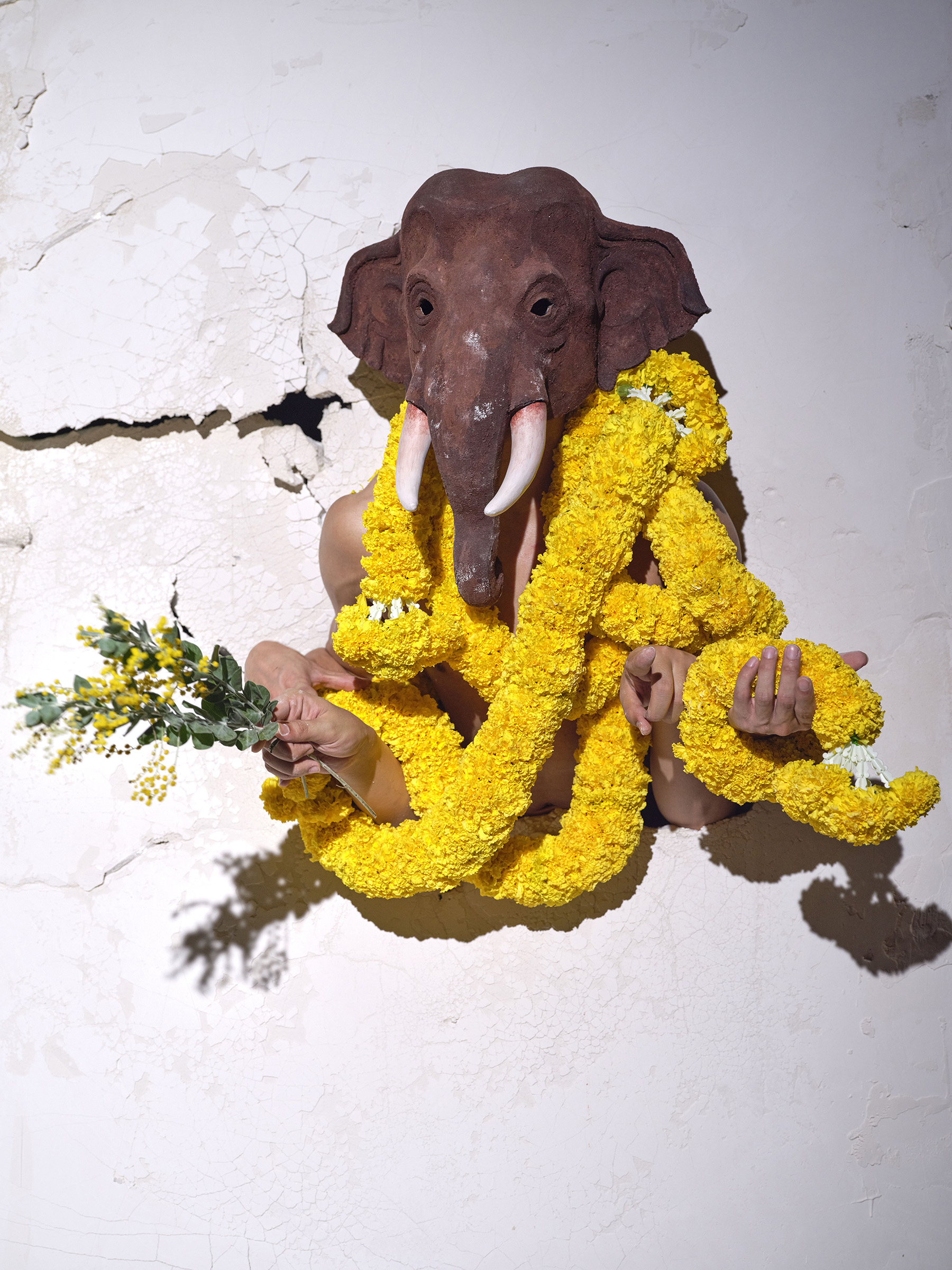
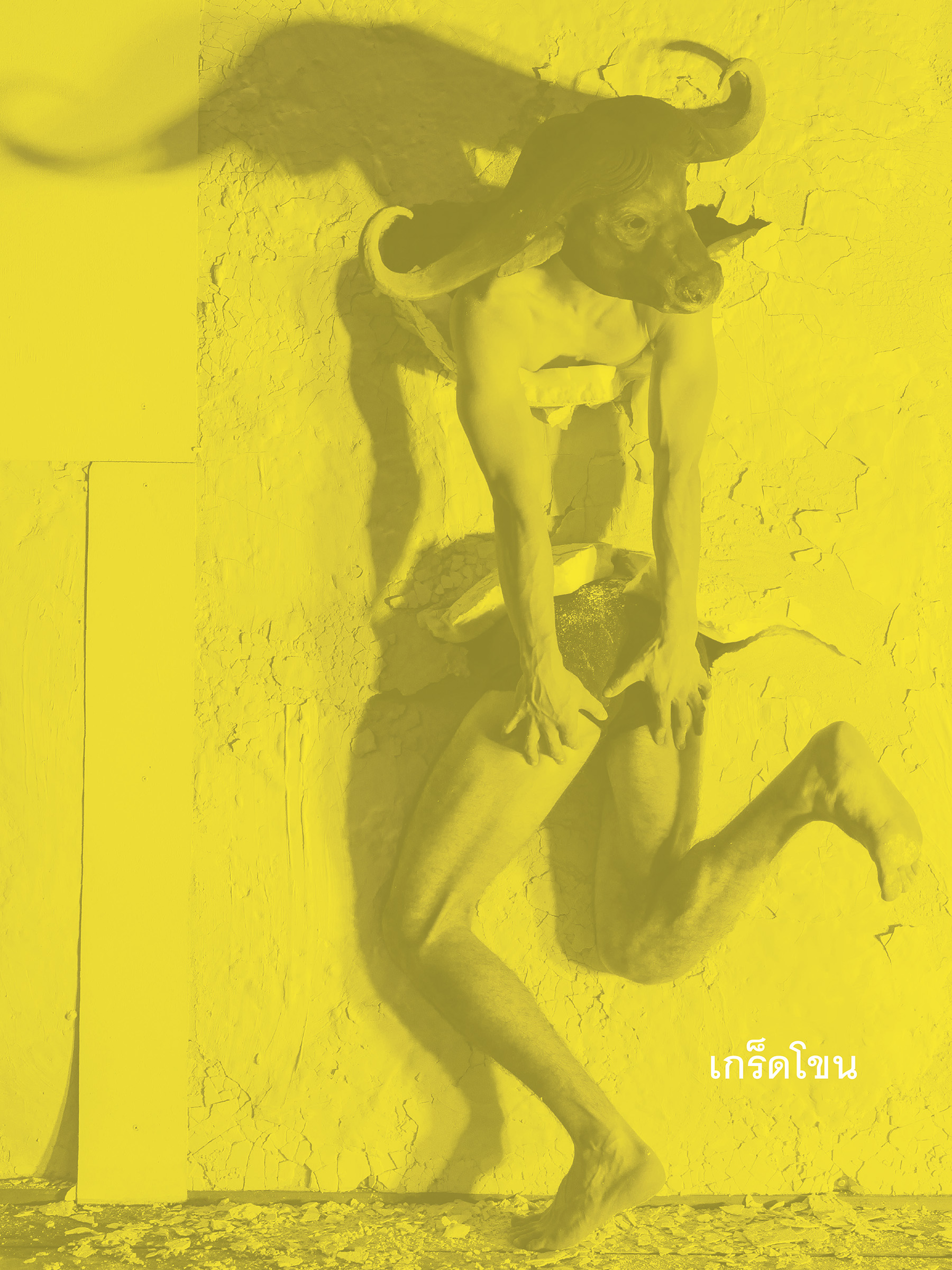
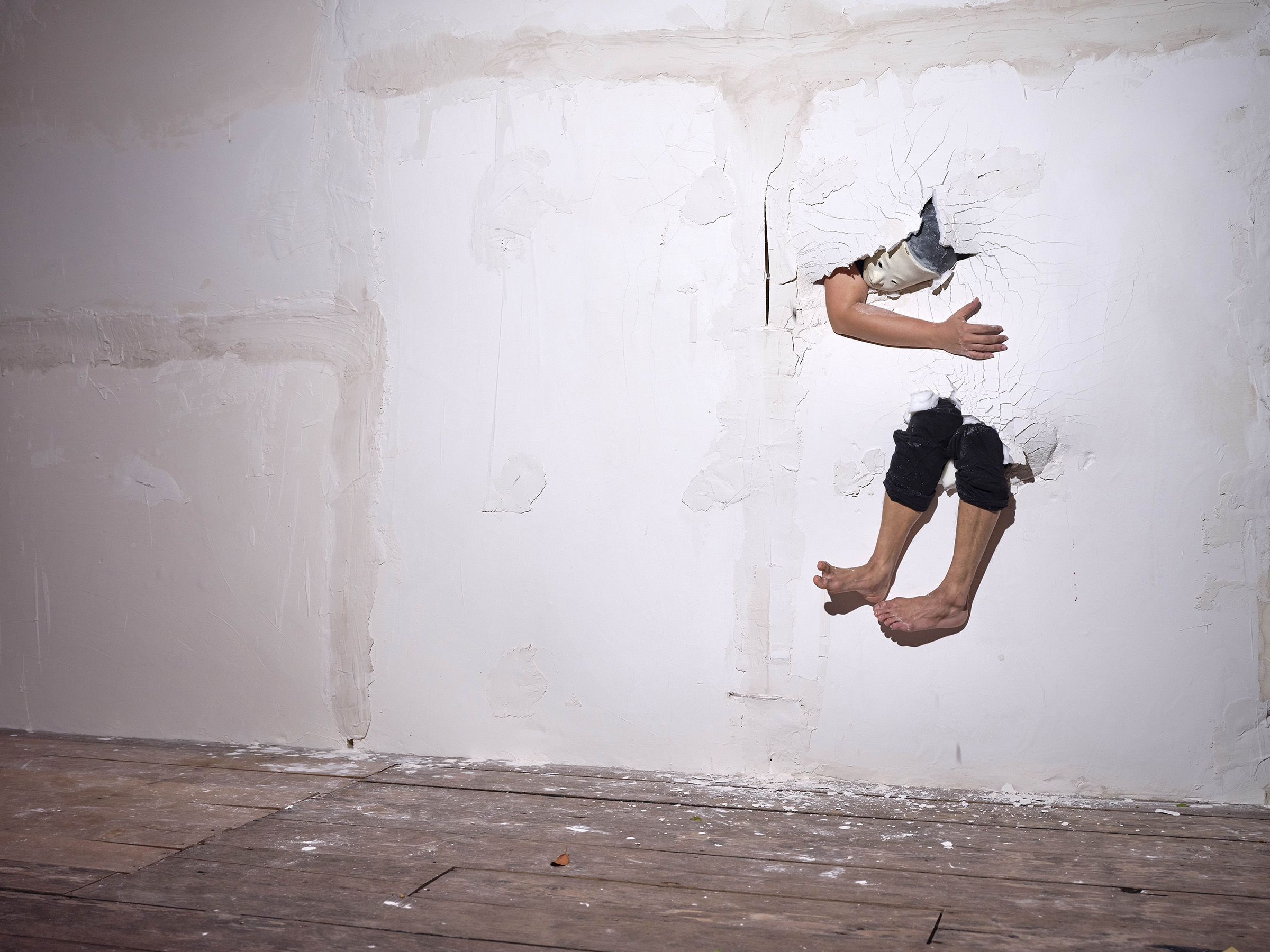
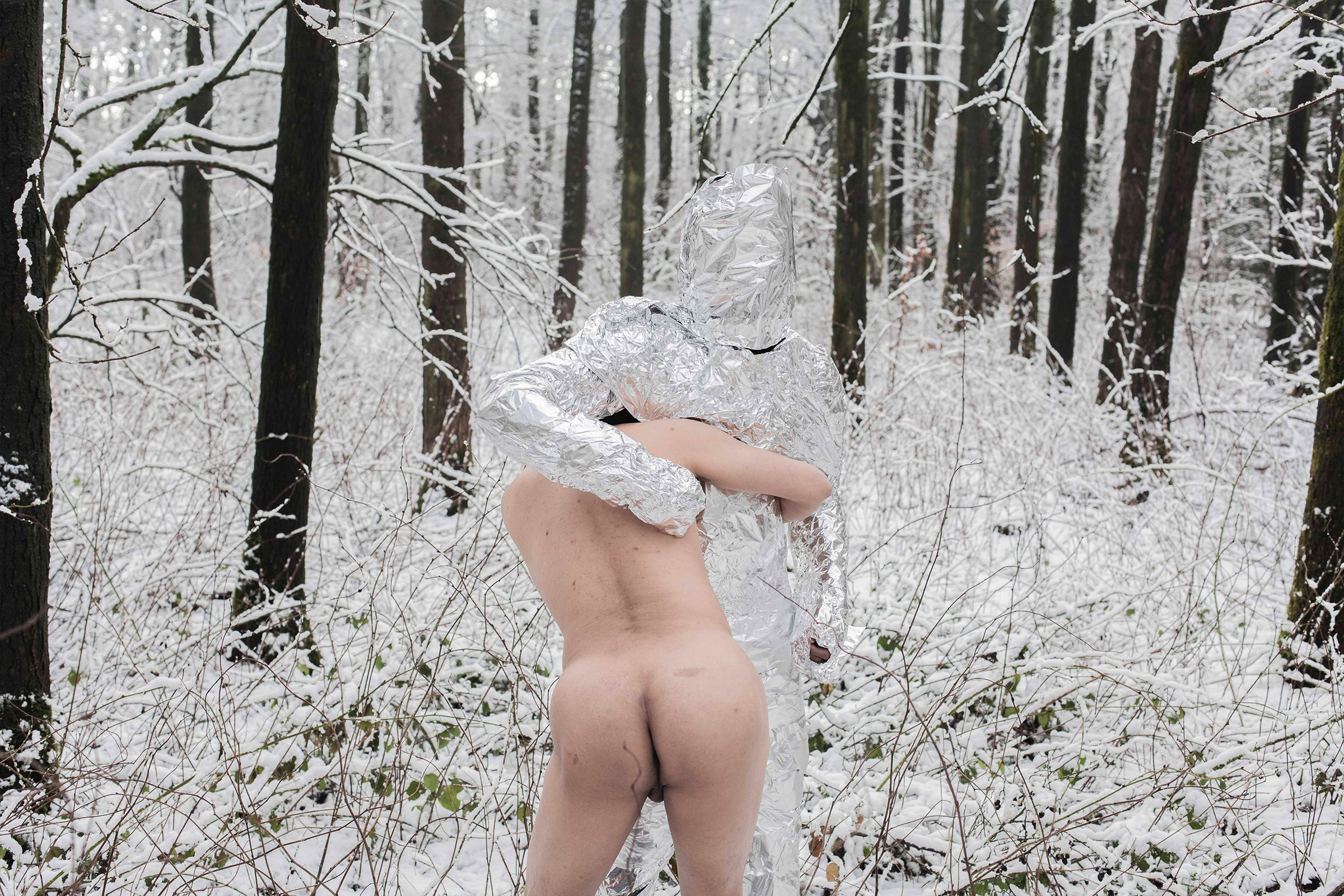
On a minimal canvas, he experiments with shaping disconnected body parts, as well as merging two bodies into one figure. Regarding the human body as architecture, Jitti envisions the connecting points of limbs and the movement of joints: to attach and detach body structures. The process of mismatching allows for wide ranging possibilities of transformation with just two human bodies. They can move as a singular being and/or multiple beings. The merging of two bodies also opens possibilities to illustrate bodily absurdities and peculiar images that look surprisingly well-balanced. In displaying some body parts and hiding others behind the canvas, he found the tendency for our cognition to connect invisible contours based on our preconceptions of a functional body.
Moreover, bodily expressions of gender in Khon are quite distinctive: male and female characters undergo different training. Jitti explores how a single dancer can articulate both masculinity and femininity through body positioning. Via a contemporary mode of performance, Jitti is able to embed traditional nuances that are subtle yet strongly felt by spectators.
Moving Sculpture
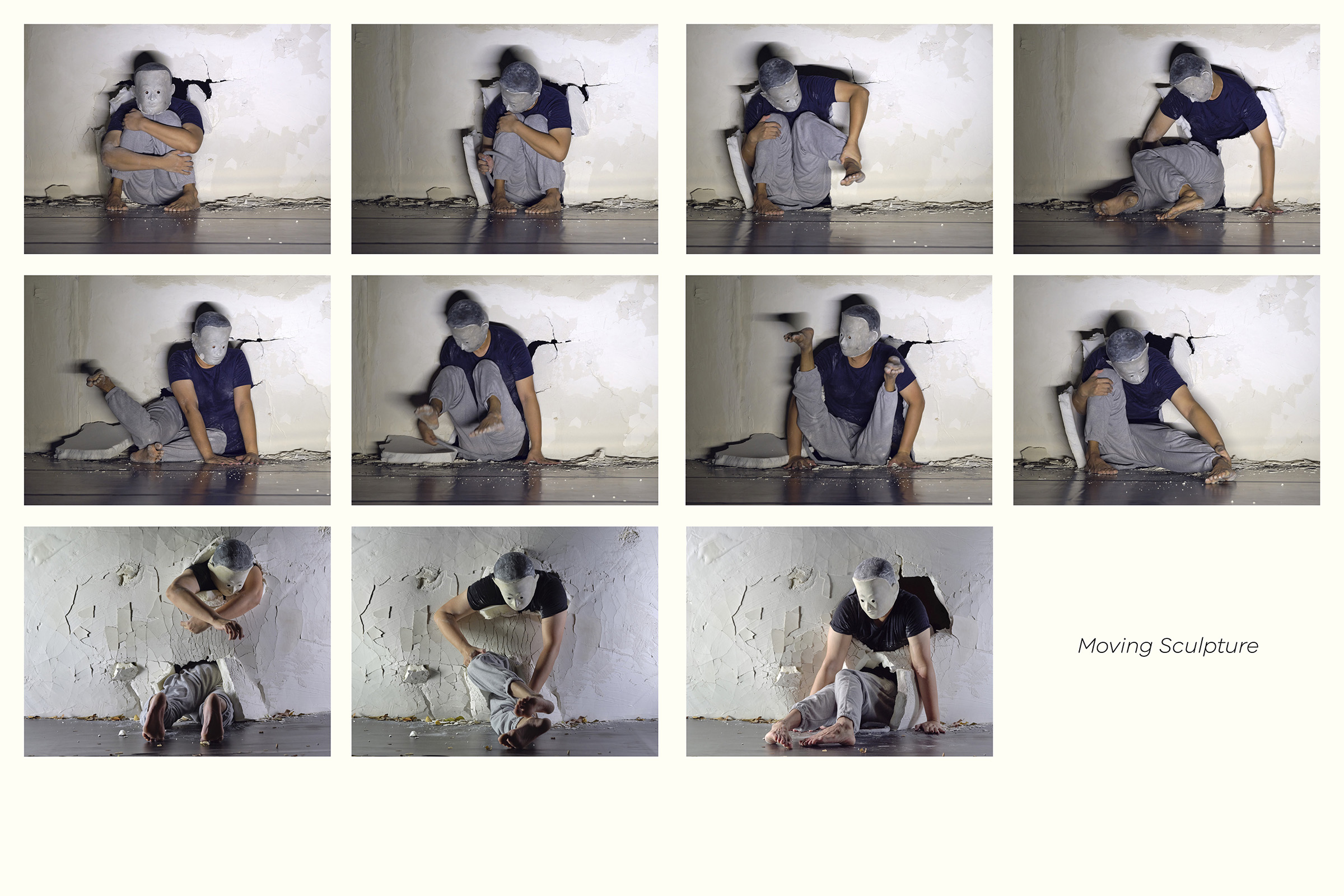
One can maneuver around a sculpture, viewing it from many perspectives to gain new insight into its beauty from different angles. Likewise, Jitti’s movement creation approach manipulates the body through a 360-degree lens. Body parts are purposefully shaped in light of the perspective from which they are gazed. The viewer is static but the dancing body becomes a moving sculpture, constantly shifting the perspective of the body for the spectator. Jitti molds postures of the body based on the unique proportions of different body types to find the ideal movement for each individual.
The Khon mask is a sculpture that Jitti minimalizes by reducing adornments and colors. Jitti is fascinated by the ability that the Khon mask holds to portray a spectrum of emotions through movement. A shift in angular degrees of the head at a specific time can convey a significant change in the character’s state of being and expression. Whether it be a traditionally adorned mask or an undecorated bare mask, the effectiveness of communication depends on how well the performer precisely directs his movement and timing based on the character's role.
Dance Scenography and Landscape
While dance is traditionally performed on a horizontal plane, Jitti incites the question of what can happen if the plane is turned upright. He utilizes a bare vertical canvas as a landscape to create compositions with moving sculptures. In Jitti’s viewpoint, a vertical plane does not restrict a performance to flatness or proscenium. On this canvas, he embodies characters from the Ramakien through lines and contours of the body.
One can contemplate that the figures and movements in Jitti’s work reflect those of traditional mural paintings by which both can narrate the same story but through different methods. Mural paintings tell their stories through two-dimensional modes that involve the filling in of flat colors into intricate figures without the use of perspective or shadows. Stories are told through tableaux that stretch along extensive walls. In contrast, Jitti utilizes the movement of three-dimensional bodies to transform one piece of canvas into dynamic illustrations. The sole interaction of human bodies on a minimal plane can conjure a sense of poetry and tradition that is inherent in traditional Thai visual arts.
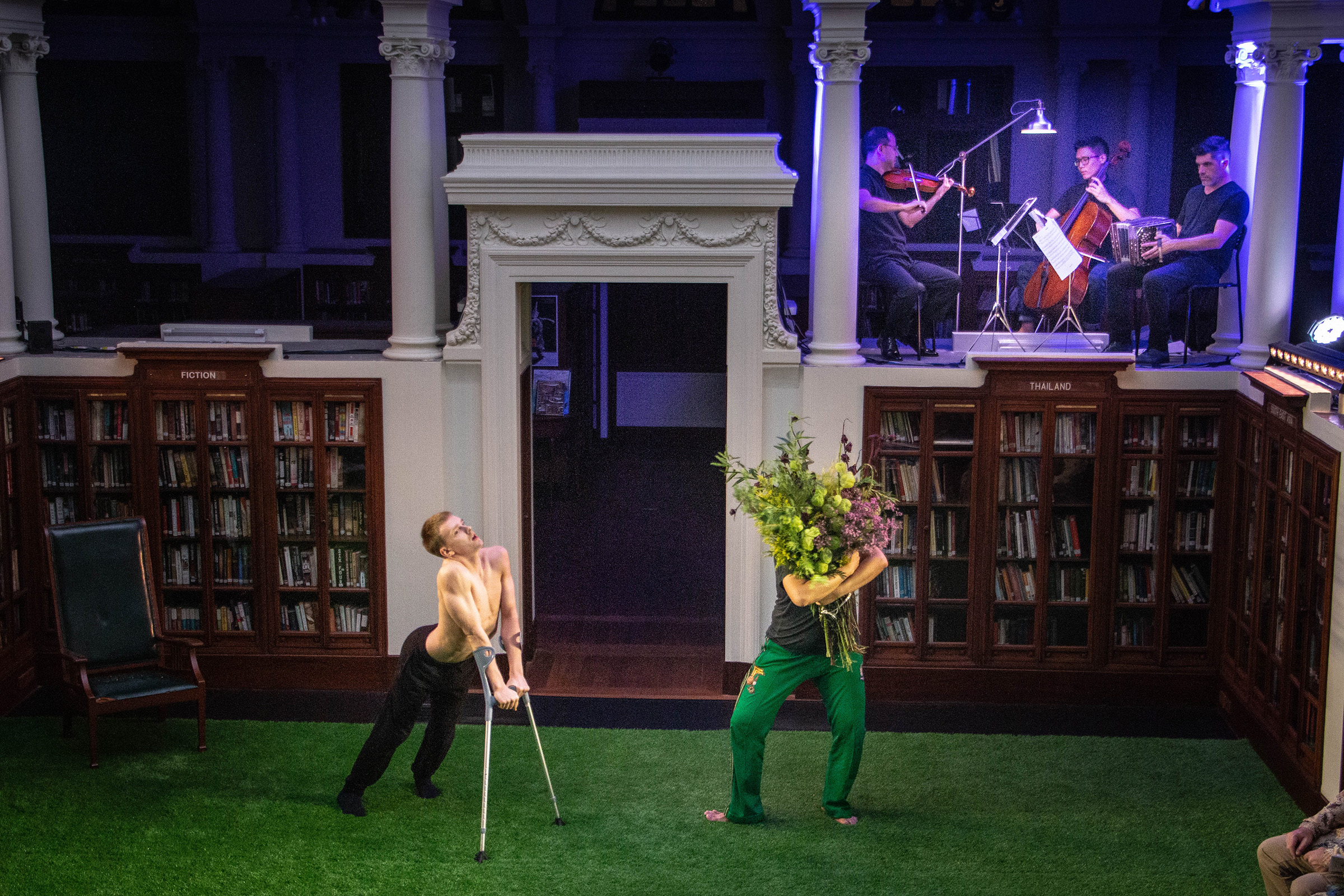
Site-Specific Performance
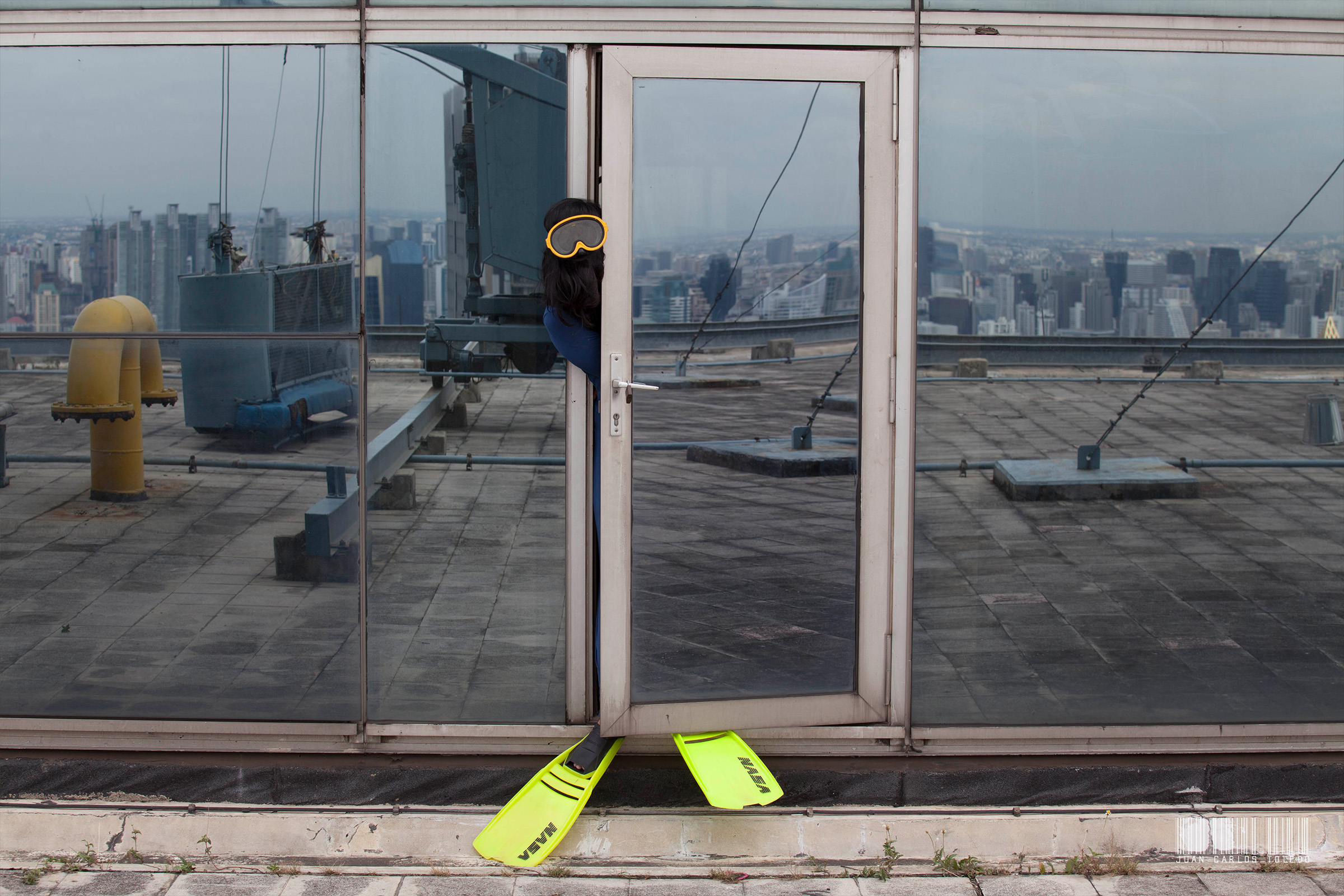
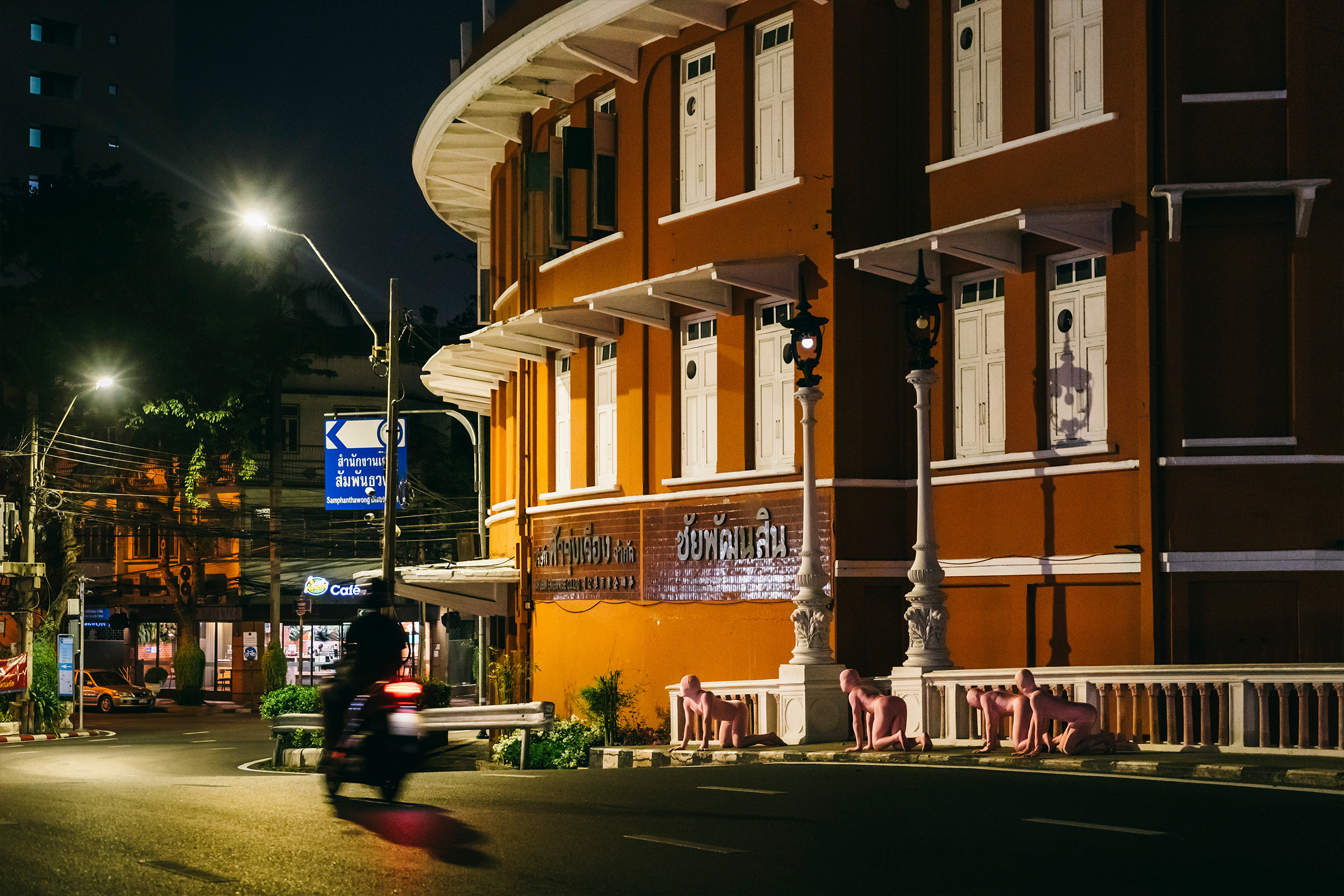
Presenting dance in unusual spaces away from the traditional theatre stage is a concrete way to engage people more in the projects. It allows the audience to engage with the performers personally since every audience member sits close to or even within the performance space. My pieces play with both recognition and strangeness and may evoke various meanings such as hidden feelings lurking within every human. At first sight, the performance can appear as something captivating to contemplate and it slowly transforms to be a landscape where we find ourselves to live in.
I also think architecture at its pinnacle form can be considered as a monumental artwork. When one enters into a polished and well-designed space, that person is filled, often unconsciously, with some kind of emotion conveyed by the specific combination of shapes, textures, colors, light, and shadow of the space, in the same way as someone experiences the view of an art piece in a museum or traditional stage. Thus, it is the premise to use architecture and various forms of space as a canvas for creations.
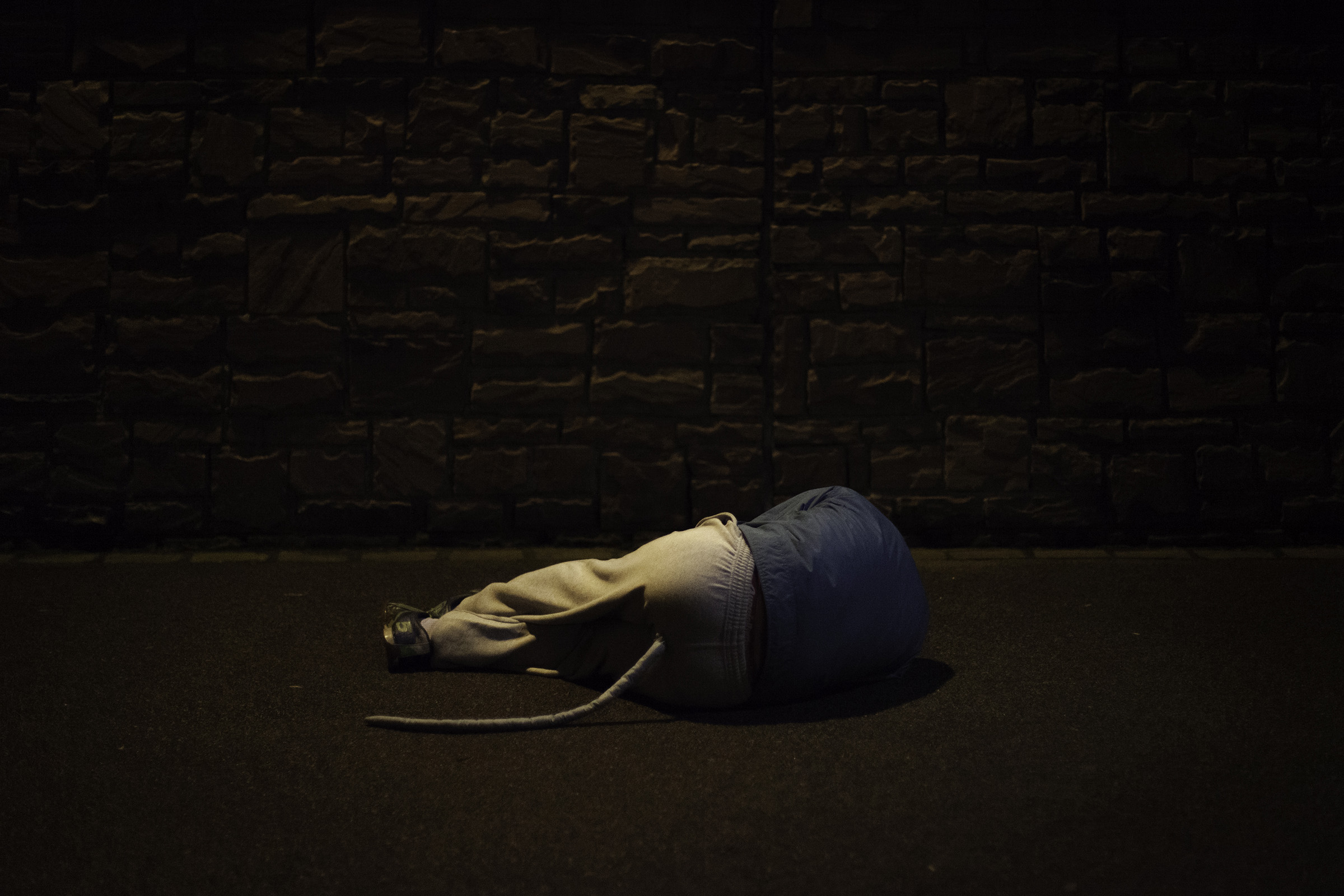
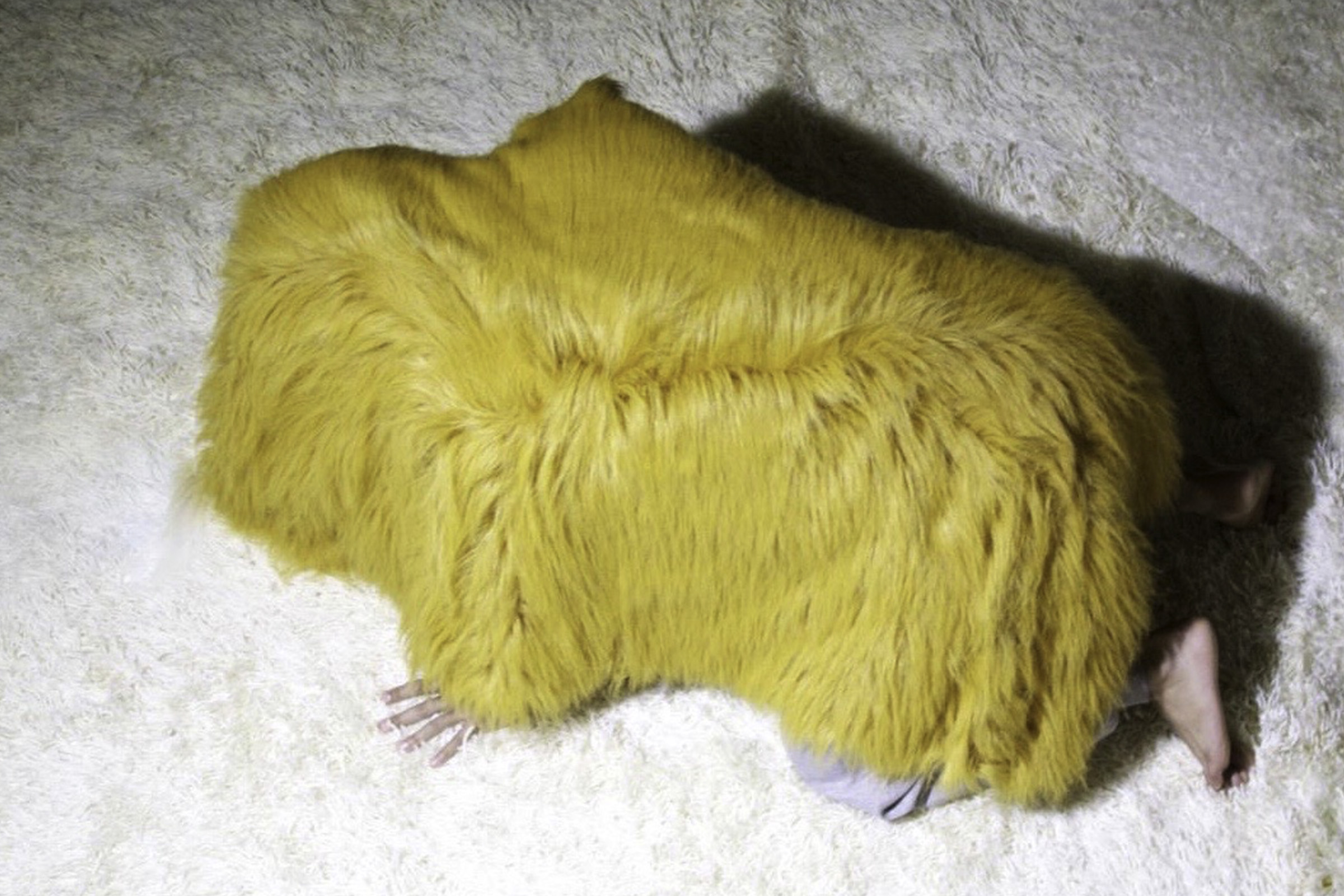
an·i·mal·ism| ˈanəməˌlizəm |
I dig into the wild side of Kafka’s animals and crossbreed characters to release them from the ordered world. The grotesque universe of Kafka blurs the line between human and non-human by allowing us to reflect on the otherness through humanized creatures. Similarly, artists have been inspired by the animal aesthetic and movements to mirror our existential dilemmas. Since the environment affects our perception, my work encourages you to appreciate various intensive, moving, and learning art experiences in the encounter with unusual atmospheres. Through unexpected tangible or conceptual layers, one may question the relationship between the subject’s gaze and the object in the same way humans look at animals in a zoo differs from observing them in the wild. Thus, my choreography proposes a unique landscape of conceptual works with a strong visual and an untamed wilderness to create a dialogue about societal issues like identity and gender through animalism and daring points of view.
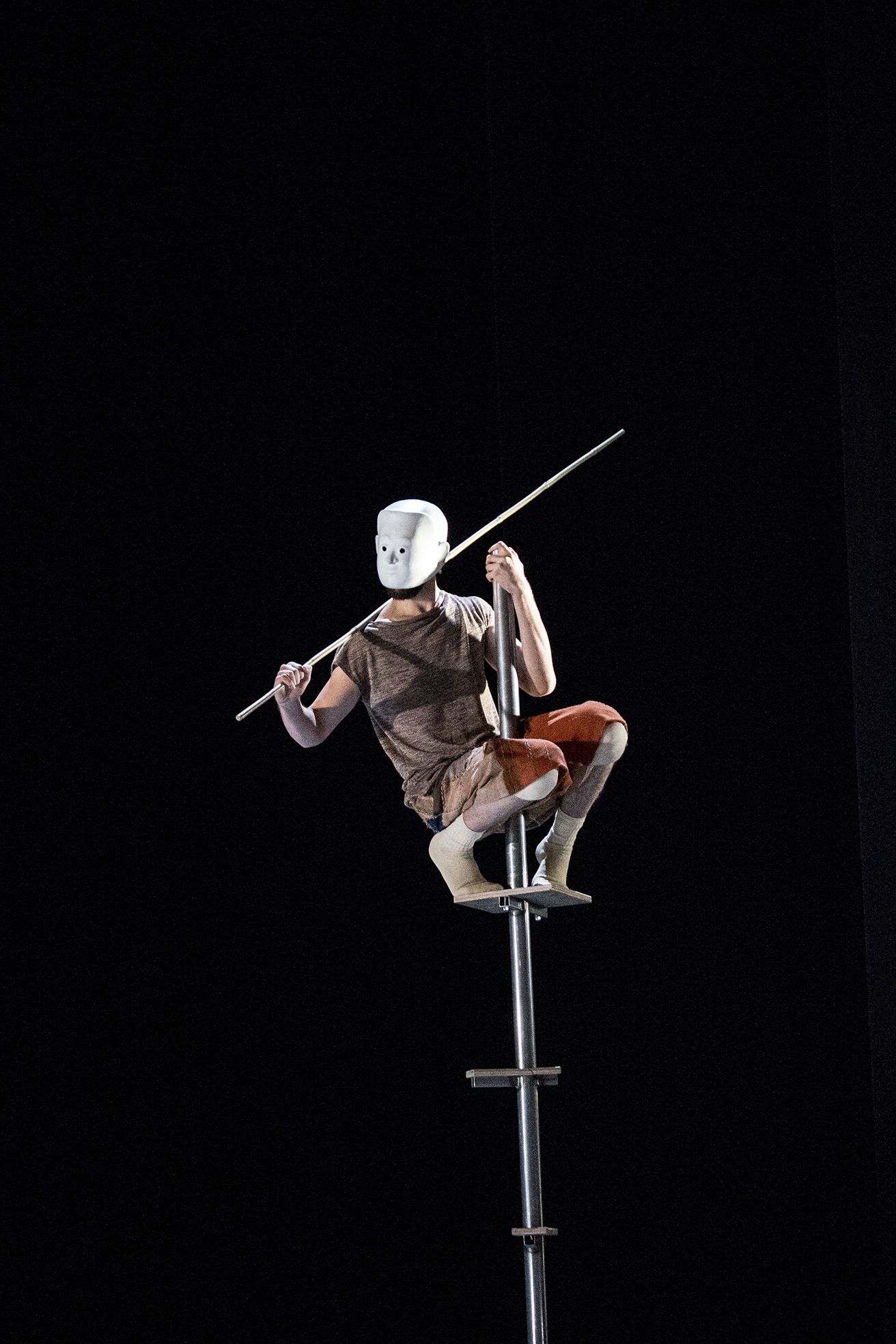
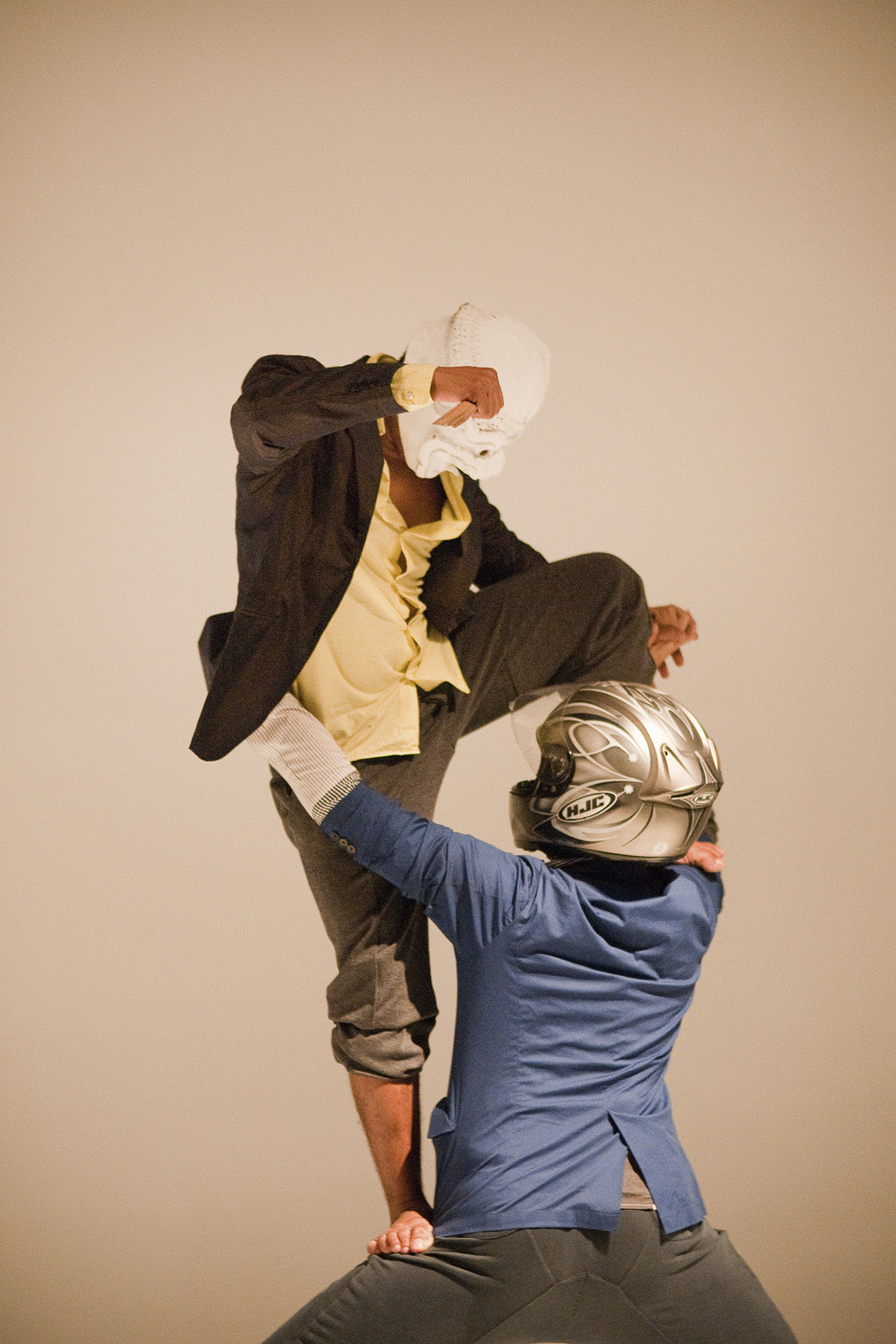
Photo credit © Piyatat Hemmatat